
Have you ever seen something like 172.16.252.214:4300 in your browser or network settings and felt confused? You are not alone. Many people see this type of address and wonder what it means. Is it a website? Is it safe? Is it public or private?
In this simple guide, I will explain everything in easy words. We will break down what this number means, how it works, and why it appears. I will also share real examples and practical tips. By the end, you will fully understand 172.16.252.214:4300 and similar network addresses.
Let’s start from the basics.
What Does 172.16.252.214:4300 Mean?
The address 172.16.252.214:4300 has two parts. The first part is an IP address. The second part is a port number. Together, they help devices talk to each other on a network.
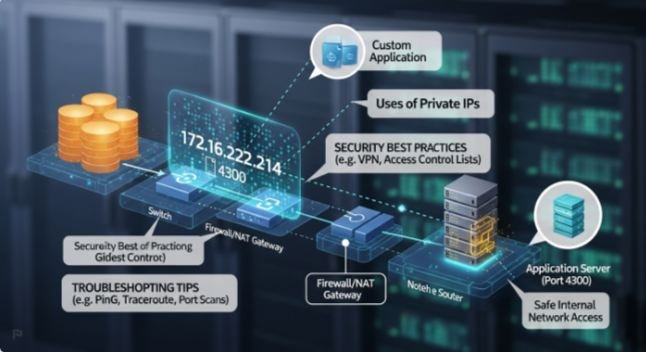
The IP address is 172.16.252.214. This is a private IP address. It belongs to a special range used inside local networks. The number after the colon, 4300, is the port. A port acts like a door for a specific service or app.
So when you see 172.16.252.214:4300, it usually means you are connecting to a service running on port 4300 inside a local network. It is not a public website on the internet.
Understanding Private IP Addresses
The IP address in 172.16.252.214:4300 starts with 172.16. This tells us something important. It belongs to a private IP range.
Private IP ranges are:
-
10.0.0.0 to 10.255.255.255
-
172.16.0.0 to 172.31.255.255
-
192.168.0.0 to 192.168.255.255
These addresses are used inside homes, schools, and offices. They are not visible on the public internet. That means 172.16.252.214 cannot be accessed directly from outside your network.
In simple words, it is like a house number inside a gated community. Only people inside can reach it.
What Is Port 4300?
Now let’s talk about port 4300. Every device has many ports. Each port handles different types of traffic.
Common ports include:
-
Port 80 for HTTP
-
Port 443 for HTTPS
-
Port 21 for FTP
Port 4300 is not a standard public port. It is often used by developers. Many web apps, especially test or local apps, run on custom ports like 3000, 4200, or 4300.
If you see 172.16.252.214:4300, it likely means a web application is running on port 4300 inside your local network.
Why You Might See 172.16.252.214:4300 in a Browser
There are many reasons this address appears.
You might see 172.16.252.214:4300 if:
-
You are testing a web app
-
Your office system runs a local dashboard
-
A developer set up a local server
-
A device like a router or tool uses a custom port
For example, I once worked on a local project where our internal tool ran on a similar address. It was only for team members. It never went online. That is very common.
So if you see this address, it usually means something is running locally.
Is 172.16.252.214:4300 Safe?
Many people worry when they see strange numbers. That is normal.
The good news is that 172.16.252.214:4300 is a private IP. It is not public. This makes it safer by design.
However, safety also depends on:
-
Who manages the network
-
What service runs on port 4300
-
Whether strong passwords are used
If this is your home network, check your router settings. If it is an office network, ask your IT team. In most cases, it is completely safe.
How Local Networks Use Private IPs
Local networks assign private IPs automatically. Your router usually does this. It uses a system called DHCP.
When you connect your laptop or phone, it gets an IP like 192.168.x.x or 172.16.x.x. That is how devices talk inside the same network.
In some companies, they use the 172.16 range for better organization. So 172.16.252.214 may belong to:
-
A server
-
A printer
-
A local dashboard
-
A testing machine
Adding :4300 simply means a specific service is active on that device.
How to Check What Is Running on Port 4300
If you want to know what is behind 172.16.252.214:4300, you can try simple steps.
First, open your browser and enter the full address. If it loads a page, it is likely a web app.
Second, ask your IT admin. They can tell you what service uses port 4300.
Third, if you are a developer, you can use tools like:
-
netstat
-
lsof
-
Task Manager
These tools show active ports and running programs.
Always be careful. Do not change settings unless you understand them.
Difference Between Public and Private IP
It is important to understand this difference.
A public IP is visible to the internet. Anyone can access it, if allowed.
A private IP, like 172.16.252.214, is only visible inside a local network.
That means 172.16.252.214:4300 cannot be opened by someone from another country unless special rules are set. This is good for security.
Think of it like this: public IP is your city address. Private IP is your room number inside a building.
Can 172.16.252.214:4300 Be Accessed Remotely?
By default, no. Private IP addresses do not work over the internet.
But there are exceptions.
If someone sets up:
-
Port forwarding
-
VPN access
-
Remote desktop tools
Then it may be possible to access services on 172.16.252.214:4300 from outside.
This should only be done by trained professionals. Wrong setup can cause security risks.
Common Uses of Custom Ports Like 4300
Custom ports are popular in development. Many frameworks use them.
For example:
-
Angular apps often use 4200
-
React apps use 3000
-
Node apps use 3000 or others
Some teams choose port 4300 to avoid conflicts. If port 4200 is busy, they may switch.
So when you see 172.16.252.214:4300, it often means a development or internal web tool.
Troubleshooting Connection Problems
Sometimes, the page does not open. You may see an error.
If 172.16.252.214:4300 does not load, check these things:
-
Are you connected to the same network?
-
Is the server running?
-
Is port 4300 open?
-
Is your firewall blocking access?
Restarting the service may fix the issue. If you are unsure, ask your network admin.
Never disable security settings without guidance.
Best Security Practices for Local Servers
Even private servers need protection.
If you run a service on 172.16.252.214:4300, follow these steps:
-
Use strong passwords
-
Keep software updated
-
Restrict access to trusted users
-
Monitor network traffic
I always recommend limiting access to only needed devices. Security is not only for big websites. Even small local tools matter.
FAQs About 172.16.252.214:4300
1. Is 172.16.252.214:4300 a public website?
No. It is a private IP address with a custom port. It usually works only inside a local network.
2. Why does it not open on my phone?
You may not be connected to the same network. Private IPs only work internally.
3. Is port 4300 dangerous?
No. A port itself is not dangerous. Risk depends on what service runs on it.
4. Can hackers access 172.16.252.214:4300?
Not directly from the internet. Only if the network is misconfigured.
5. Why do developers use custom ports?
They avoid conflicts and test apps safely in local environments.
6. How can I find who owns 172.16.252.214?
Since it is private, it belongs to a device inside your local network.
Final Thoughts on 172.16.252.214:4300
Now you understand what 172.16.252.214:4300 really means. It is a private IP address combined with a custom port. Most of the time, it is part of a local system or development project.
There is no need to panic when you see it. Instead, think of it as an internal address. It helps devices talk safely within a network.
If you are curious, explore your network settings. Learn how IP addresses and ports work. This knowledge is powerful. It helps you stay safe and confident online.